Friday, September 1, 2017

5 Years as Israelis!

It's been 5 years since we boarded the plane to Israel and a lot has changed (and some things haven't):


1. When we made aliyah we were 2 people. We are now 5 people. Despite the growth, we live in the same (small) apartment. 

2. Our Hebrew vocabulary has greatly improved. Most recently with pre-school/gan related words. Not long ago, we proudly reached the milestone of learning a new Hebrew word from our kids. It won't be long before their Hebrew is fully better than ours. No doubt they already have better accents.

3. We are continually exploring our country. We love finding new/off-the-beaten-path sites and try to use our National Parks membership as much as possible. With three little ones in tow, the nature of our adventures has changed a bit, but I can confidently say that our kids have been to more archaeological sites than most adults. 

4. Matt is nearing the end of his student career (one more year 'til PhD, we hope!) and after almost 5 years at the same job, Stef is on the job search again. We're looking ahead to some good professional changes for us both in the near future.

5. We are happy here. Life in Israel isn't always easy (that's true for most places though, right?), but we have never regretted our decision to move here and make our family here. Every day/week/year has brought new excitement and new challenges and we look forward to what Life as Israelis will continue to bring us. 


Love,
Stef, Matt, Lev, Hila and Aviv


Monday, December 1, 2014

Celebrating a First Birthday as Israelis

It sounds cliche, but it's really hard to believe that a whole year has gone by since Lev and Hila were born. On the one hand, we can't imagine our family without them, but on the other hand, it's like they were just born yesterday!

As Israelis, the big question was: will we celebrate their Hebrew or civil (Gregorian) birthday?  Growing up in the US, both Matt and I feel more connected to our civil birth dates, so it seemed natural to us to want to celebrate on November 24th. However, many of our friends here in Israel, especially in our religious community, celebrate birthdays on the Hebrew date (for those of you unfamiliar with the Hebrew calendar, it is a modified lunar calendar with it's own set of month names. It is through this calendar that the Jewish holidays are set, which is why they fall out on different civil dates every year). 

One of the nice things about our kids' Hebrew birthday, the 21st of Kislev, is that it falls out a few days before Chanukah (this year, it coincides with the 13th of December). Last year, if you can remember, Chanukah fell in November and overlapped with Thanksgiving, an extremely rare occurrence. Chanukah usually falls in December. This means that for most years, Lev and Hila's civil and Hebrew birthday will be many weeks apart. Which is exactly where we find ourselves today - between the birthdays, or as I like to call it "Chol HaMoed Birthday". 

The Hebrew phrase "Chol HaMoed" means "the weekdays of a festival" and refers to the intermediate days of the holidays of Sukkot and Passover, aka the days in between the first and last day(s), the Yom Tov days. Where the first and last day(s) are the "actual" holiday, the Chol HaMoed days combine features of both the weekday (chol) and the festival (moed). So too for "Chol HaMoed Birthday". We will celebrate both birthdays with birthday festivities and we will enjoy the intermediate days with a heightened sense of celebration, but still go about our daily business. Lucky for our kids, they basically get a full month of birthday!

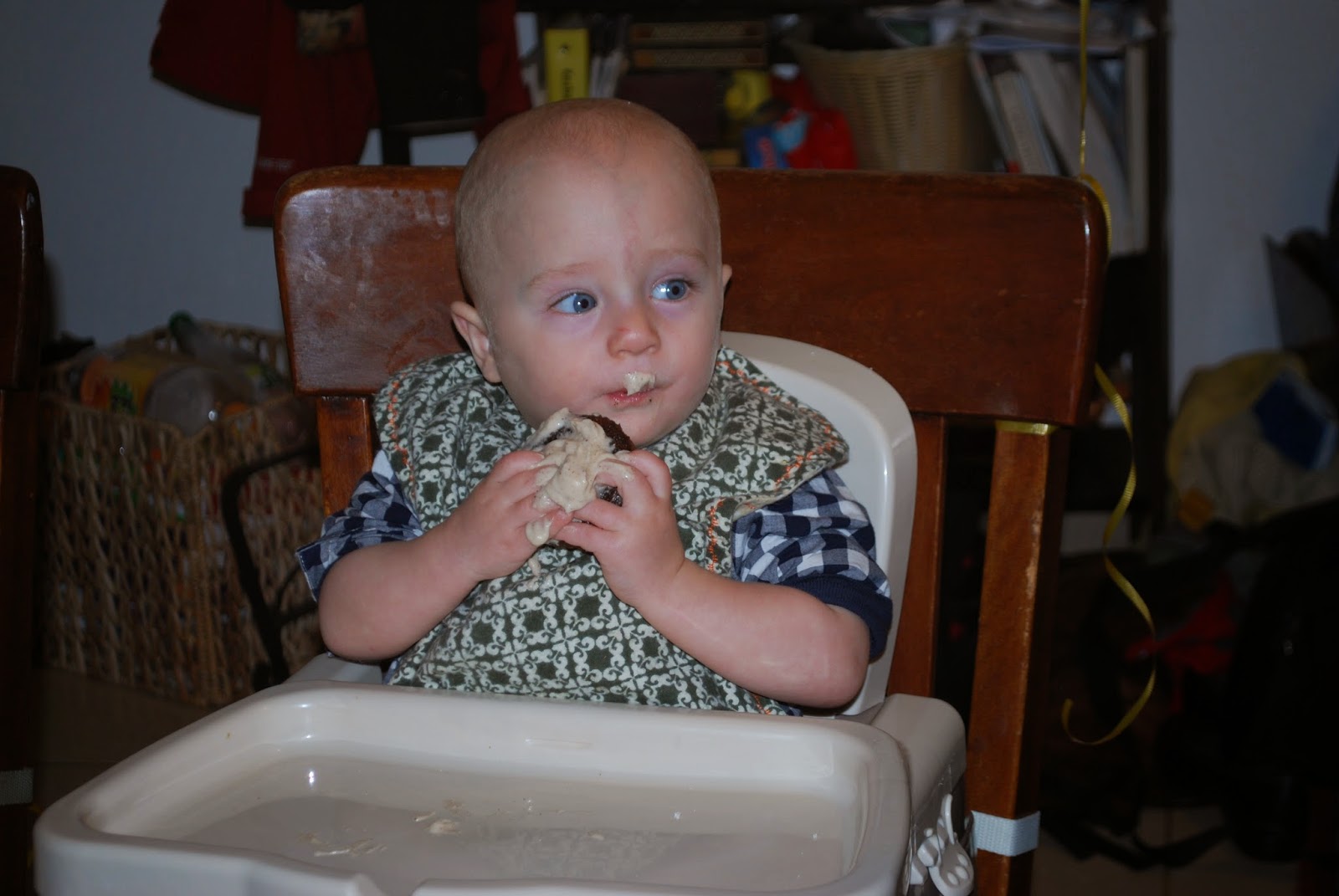
For their November 24th birthday, we were thrilled to have my (Stef's) parents visiting from the US. We were also joined by some of our closest friends here in Israel and various other family members via Skype. Lev and Hila got dressed up, enjoyed their very first cupcake (a carob zucchini cupcake with a cinnamon cream cheese frosting) and opened presents. We also sang them a special birthday song we wrote just for them (Be forewarned, it is very catchy, here's the link: https://www.youtube.com/watch?v=6LpeVk56Tus) It was a pretty awesome evening!  Now on to planning how we will celebrate their upcoming Hebrew birthday! 

I'm in a writing mood these days, so check your inbox for more updates to come!

Have a great week and enjoy Lev and Hila's Chol HaMoed Birthday!

Love,
Stef, Matt, Lev and Hila


Friday, July 11, 2014

Our first "Code Red" Siren as Israelis


When the "Code Red" siren wails just before 3:30 am in the middle of a hot summer night, the first thing you do is grab your kids. The second thing you do is realize that you're in your underwear and the safest place in your building is the stairwell where all your neighbors will also be gathering. So you use the 60 seconds you know you have until the rocket is able to hit to throw on whatever clothes you can find, re-grab your kids and shuffle out, barefoot and half-dressed into the hallway. 

For those of you closely following the escalating conflict here in Israel, you will know that Haifa (where we live) is quite far from Gaza. The one rocket warning we got last night is nothing compared to the barrage of rockets raining down on the south of the country. The experience we had last night only allowed us to scratch the surface of what daily life is like for so many people here. 

As we head into Shabbat, we hope that this conflict reaches a quick and peaceful end, that no more lives are lost on either side and that we can find time to get to know our neighbors while fully dressed and not fearing for our safety.

Shabbat SHALOM and have a great weekend,
Stef, Matt, Lev and Hila

Friday, May 23, 2014

6 Months of Being Parents as Israelis

It all started in mid-November when Matt suggested we have a "hodesh ivrit" / "Hebrew month" during which we would only speak Hebrew to each other. Knowing that once the twins were born we would only speak English at home so they would learn it, we figured we had at least a month (I wasn't due until the beginning of January) to focus on our Hebrew.

Then my water broke. 

I was only 33.5 weeks along and we were wholly unprepared. We had no plan of how we were getting to the hospital, no bag packed and nothing set up in the house. So, at 11pm we called our neighbor to ask for a ride to the hospital. And this is when "hodesh ivrit" really began.

We arrived at the hospital only to find out they had no room in their NICU and would need to transfer us to another hospital on the other side of the city. Despite this news, I was feeling pretty great because I had just recently learned the word for NICU in Hebrew (pagiah), so I knew exactly what they were talking about!

When we got in the ambulance, they got me all strapped in and then the driver informed us that the engine wouldn't start. That's ok, I because I had learned the word for engine (manoa) in Ulpan. While we waited  for the new ambulance, the EMT was concerned about timing my contractions (tzirim). I knew this word too, so I was feeling pretty confident when my contractions starting to be between 3 and 5 minutes apart.  

We finally got to the hospital and in a string of miracles, the doula (who we had decided not to call because we had just met her the day before) was assisting the women in the room next door. She agreed to be present at my birth, too. Somehow we navigated labor and delivery all in Hebrew and I even yelled at a few doctors and nurses in my adopted tongue. As soon as the babies were born, they were whisked away to the NICU, both coming in at under 2 kilo (one just under and one just over 4 lbs). It would be hours until we would get to see them. In the meantime, I was asked a number of times by doctors and nurses about my height and weight. This is where my success with Hebrew broke down. I only knew my details in feet and pounds, they wanted centimeters and kilos. I kept apologizing that I didn't know my height and weight in the right units and I was too exhausted to do the math, but they would just walk away, frustrated. It took a Canadian medical student to actually pull out his phone and do the conversion for me. Thank you random Canadian med student. 

We spent the next month in the Children's Hospital NICU watching our healthy (thank God), but tiny babies grow big and strong enough to come home. For the majority of our time there, we shared our room with two other sets of twins and their parents. One couple we became particularly close with, whose identical twin boys were born at just about the same time and the same amount premature as our babies, was from an Arab village about an hour from Haifa. Our amazing nurses were from all over the world - Russia, Uzbekistan, Argentina, and of course, Israel. The one language we all had in common was Hebrew, so that is what we spoke and in the end, we succeeded in getting our "hodesh ivrit" (Hebrew month).

All of that now seems so long ago as we gear up to celebrate Lev and Hila's 1/2 birthday this weekend. It's hard to believe that 6 months have gone by, but we can hardly remember life before parenthood. Besides learning how to be parents, we have also had to learn how to be parents of twins. On top of that we had to learn how to be Israeli parents. Here are a few things we've learned:

1. Everyone and their mother will tell you how to raise your children. Smile, nod and ignore. Countless Israeli women, including complete strangers, have commented that our kids are too hot, too cold, not wearing a hat when they should be or have sun in their eyes. I know their intentions are good, so I usually throw a hat on them when they say something. We live in a country full of Jewish mothers.

2. Strangers stare at your children and this is not considered creepy. On the bus, on the street, people may come up to the stroller and peer in. When the babies are being carried in carriers, our personal space is often violated. This is only magnified by the fact that we have twins.

3. Everybody has a sister's friend's cousin's daughter's babysitter's barber's nephew who has twins and they want to tell us about them. Every time we go out to a restaurant with the kids, someone comes up to our table to tell us about the twins they know. There have been times we have needed to avert our eyes and break eye contact to get our visitors to go away. 

4. Two babies may be double the work, but they are also double the fun. Especially now that they can play together. And by play together, I mean, stick their fingers in the other one's eye and/or mouth and/or ear. Watching them interact with each other has been one of the most awesome things of all time, especially when they hold hands.

5. Twins can (and are encouraged) to share a crib, until they can't. How do you know when they can't? When you wake up in the middle of the night to see one babbling to himself with the other, who has rolled on top of him, screaming in his face. 

6. Double strollers are great, but also a huge pain in the butt when you live in an apartment on the third floor of a walk-up in a city built on a mountain. You therefore learn to love baby-wearing. We have worn our kids in baby-carrying wraps every week to shul, day trips to Tel Aviv, quick grocery store runs, to archaeological sites and on hikes - all without a stroller.

7. You have skills you didn't even know were skills. For example: getting a double stroller onto a city bus by yourself, changing a poopy diaper in the dark, carrying two infants at the same time while answering the door, cutting fingernails that are microscopically small, not sleeping through the night and somehow still being responsibly functional by daylight, nursing two babies at the same time while writing this...

8. It is possible, albeit exhausting, to be a full-time working (from home) mother and a full-time student father and still raise your kids at home - with the help of friends and neighbors turned babysitters.  

9. It is amazing how different two babies can be. We can easily differentiate between their cries, laughs and babbles. They have opposite personalities. They are developing at completely different rates - which is totally normal. We have been told not to compare them, which is hard, but we try.  

10. Being immigrants far from your family is challenging at times, but the network of other olim (immigrants) is powerful, endlessly helpful and inspiring. 

There are so many more things to say, but this is long enough. We are thoroughly loving being parents, parents of twins, and of course, Israeli parents. It may be another 6 months until I write again (my time is precious, I spend most of it doing laundry), so please feel free to be in touch if you want any intermittent updates.

Enjoy these gratuitous baby pictures!


Shabbat Shalom and have a great weekend,
Stef

Thursday, October 31, 2013

From 10 Shekel Movie Night to Babyland as Israelis

Hello everyone! It's been a while since I wrote an update - so here is just a quick general overview of what's been going on in our lives lately.

I am not working (and no one is willing to hire a pregnant lady), so I spend everyday trying to figure out ways not to be bored. Matt is a couple weeks deep into the semester after spending 3 weeks working on an archaeological dig. He is actually taking some coursework in Hebrew this semester which will be a great challenge and an excellent boost to his Hebrew. He spends the rest of his time writing articles with (read: for) his advisor and working on his dissertation. 

As the babies (yes, we are having twins for those who haven't heard yet) are due to arrive in just about 2 months, we have also been taking advantage of our last months of couplehood to travel around the country, see friends and go out on an occasional date. This led us to be motivated to take advantage of "Cinema Day" where most major movie theaters in the country were offering all movies for the discounted price of 10 shekels (about $2.50). The cheap tickets drew us in as well as, it seemed, every other person in Haifa. Granted, I don't know what the mall and movie theater are like on an average Thursday evening, but it was like someone was giving away free iphones with all the people and crowding and pushing. I was acutely aware of the lack of personal space with my new ginormous size and had to fight my way through the crowds blocking strangers from inadvertently groping my belly.

Since we waiting a little bit too long to order our tickets, it meant that our first choice movies (that were showing at reasonable hours) were sold out. We ended up getting tickets to see "Behind the Candelabra" / "חיי עם ליברצ'ה" (which turned out to be and HBO special, but was playing in theaters over here) about the last 10 years of Liberace's life and his secret affair with a young man. We knew very well what we were getting into when we decided to see this movie: explicit sexual content, vulgar language and "adult" themes, which is why we were particularly surprised to see so many young teenagers when we got into the theater. The film was rated 14+, lower than the possible 16+, and there seemed to be a lot of people who just squeaked in past that 14 year old cut off. These kids were particularly noticeable since movie theaters in Israel have assigned seating and many adults coming in (including us) had to ask these teens to get out of their seats. This lead us to believe that maybe these kids bought tickets to another movie and sneaked into ours. The most annoying thing about teenage Israeli kids is that they talk to each other in loud voices as if they were in their friend's bedroom, some of them even talking on the cell phones, WHILE THE MOVIE IS PLAYING! And all the shushing from people around them doesn't make it any quieter. However, after a few sexually explicit scenes between Michael Douglas and Matt Damon, teenagers could be seen hurrying down the aisle as if they couldn't get out fast enough. I guess they didn't read up on what the movie was about before they sneaked in. 

Early the next morning I found my self back in the exact same movie theater, but this time for a pregnancy convention put on by Rambam hospital, the largest hospital in Haifa. Replace crowds of loud, obnoxious teenagers with large, round pregnant ladies pushing their way to get free samples of diaper rash creme and formula. A completely different scene, but no less terrifying. Don't get me wrong, I love a free sample of stretch-mark preventative lotion as much as the next woman, but I refuse to push my way through a 10-belly-deep crowd to get it. This put me in the minority, although I still left with quite the booty of baby related sample items I may or may not ever use. The convention also hosted a series of speakers, doctors and midwives, from Rambam hospital who spoke about topics ranging from labor and delivery to post-natal care. In the stadium seating movie theater full of pregnant women (another terrifying/hilarious scene) I found the woman from my birthing class who had invited me to this event in the first place. It was good for me to sit next to her during the lectures so I could ask her questions when Hebrew words I didn't know were used. This happens fairly frequently in our birthing class also, where new words are constantly coming up. This is mainly due to discussions of body parts that don't commonly get discussed in ulpan or anywhere outside of birthing classes for that matter. Thankfully, the people in our class are very forgiving and don't judge me for asking what פטמות / p'tamot are (they are nipples) when discussing עיסוי פטמות / eesui p'tamot (nipple massage) in the context of stimulating labor.  

Later in the week I found myself again at another baby convention, this time in Tel Aviv, accompanying a friend who wanted to hand out surveys there as part of her Master's thesis research on the impact of disposable diapers on the environment. Unlike the previous convention, this one had no education content and was just a massive convention center packed with vendors giving away free samples and trying to sell their baby-related wares. Oh, did I mention that this convention was called "Babyland"? If the Haifa convention which filled a couple hundred seats in a movie theater seemed overwhelming, this place was teeming with thousands of parents (mainly mothers) pushing their super fancy strollers and chasing after toddlers while still pushing their way through crowds to collect their free samples. Again, I left with tons of free stuff, which I can't complain about, but I think I have had enough baby-related consumer stimulation to last me until our babies are born. No more baby conventions for this mama-to-be. 

This weekend we are off to Matt's aunt and uncle's kibbutz with some friends to spend Shabbat in the desert before it gets too hard for me to travel and my only mode of transportation will be getting rolled around like Violet, the blueberry girl from Willy Wonka. Thank God, at this time, I am still walking around and feeling great!

Shabbat Shalom and have a great weekend,
Stef and Matt

P.S. Here is the magnet I received as a gift for my participation in the Rambam convention (29 weeks pregnant).


Monday, September 2, 2013

One Year as Israelis!

Well, we made it folks. An entire year as Israelis! 

A few days ago, on Friday, August 30, we touched down at Ben Gurion Airport and celebrated our 1 year "aliyah-versary".  When we booked our tickets to the States months ago we didn't plan on returning from our vacation exactly one year to the date of the day we made aliyah, but when we realized the coincidence (about a month after booking) we thought it seemed appropriate. 

Making Aliyah - August 2012

One Year Later - August 2013


Visiting our families in the US the past month, we all agreed that it hardly seemed as though a full year had gone by. Stopping to think about the past year, however, reveals how much (and in some ways how little) has changed. Some things are obvious: a year ago, we were living in a tiny temporary apartment, frantically apartment searching and trying to decide what neighborhood we would ultimately live in. This year, we came home from the airport to our comfortable (albeit unairconditioned), fully furnished, familiar abode. Last year at this time we knew no one in our new city. Now, we have friends and a community that support us in innumerable ways. Over the course of the past year we have learned the ins and outs of the Israeli bureaucratic system, our Hebrew has significantly improved, and we can navigate freely around Haifa. We have come to love our new city, continue to love our new country and are fully happy with our decision to make aliyah.

At the same time, some things are still the same. I am again job searching and am still trying to figure out what my new career path is. While I was gainfully employed for much of this past year and the program I worked for was highly successful, I will not be continuing with that job as I am due to give birth (oh yeah, that's new too!) just shortly before the main part of the workload picks up. In the meantime, I am looking for part time gigs and am again being pushed in the direction of teaching English, something I shied away from a year ago, but am trying to be more open to now. Matt is still a student, and although he completed a HUGE feat by submitting a 361 page thesis this year, is now starting over having just submitted his official dissertation proposal and registered as a full doctoral student. 

While in many ways we feel as though we've settled in and fully acclimated to our lives as Israelis, we know that there is still a lot we haven't encountered and a ton we will continue to learn as we come upon new experiences and new challenges. Surely our second year as Israelis will be completely different than our first - mainly navigating our expanding family - but we feel equipped to deal with whatever comes our way. 

The year came to a nice close as we sat with our friends at their Shabbat table, the same friends (who were then barely acquaintances) who hosted us the very first night we arrived in Haifa. It is nice when life comes full circle. 

Last but not least, thank you to all the dedicated readers who have been following our journey over the past year. Whether you read just a few posts here and there when you could find the time or if you religiously followed us week by week, we appreciate all the support, encouragement and shared anecdotes we received from you. The process of writing and reflecting on our experiences each week has been an invaluable part of our aliyah process and for the first time in my life, I have succeeded in keeping a "journal," something I have attempted (and failed at) many times. My initial intention was to write once a week for our first year as Israelis (which I nearly accomplished, missing just a couple weeks when things got busy). Many people have encouraged us to keep writing and we might, but maybe not as frequently, or maybe just when really major or interesting events come up. 

Have a great week, Shana Tova U'Metukah (to those celebrating the upcoming Jewish New Year) and Happy 1 Year Aliyah-versary to us!
Stef and Matt

Sunday, August 25, 2013

American Shopping Adventures as Israelis

Part of being in the US means the inevitable shopping trips to get those items that are impossible and/or challenging and/or expensive to get in Israel. On our shopping list this trip included such big ticket items as a new laptop (my old one decided it didn't want to turn on any more) from which I am writing right now, some new clothes and shoes - which tend to be less expensive here, a stroller and other baby related items (yes, for those who haven't heard, we are expecting!), and English books.

Matt had a particular list of books that he needed/wanted for this upcoming school year and, as he did when living in the US, ordered them used from Amazon. For those who are familiar with this form of shopping, you know that there are sometimes ridiculous deals where books costs just a few cents and all you're basically paying for is shipping. Matt luckily found one of the research books he needed, that costs over $50 when new, for just 1 cent used. In retrospect, he could have found this suspicious, but this was not the first time he ordered something like this. 

When the books arrived, Matt opened up the first two and they were just what he was expecting. I opened up the third one for him, and to my surprise, did not see what I expected to see. "Did you order this?" I asked, mostly out of confusion. The book I opened was called "California Screaming," an steamy novel of gay sex-capades in Los Angeles. 


It just didn't seem like a book Matt would need for school. When we turned the book over, however, we saw that the company had placed a bar-code sticker on the back with the proper ISBN and title: "Kingdom of the Hittites." Now that seems more like it. 


We are still in the process of figuring out how to the return the book and hopefully get the correct one before we head back to Israel on Thursday. Wish us luck.  

Have a great week!
Stef and Matt

Monday, August 19, 2013

In America as Israelis

After almost a full year, we are back in the US for a visit. We have kept very busy so far seeing family and friends in New York and LA and Buffalo is up next. 

Being in the US after a year of living in Israel has made us think a lot about being both American and Israeli. There are times that being here makes us feel very Israeli and other times where we are reminded that, in many ways, we are still very much American. For me, a pivotal moment is when a plane full of Israelis touches down outside of Israel. My nature, in general, is to be a rule follower. When I am asked to do something, like stay in my seat until the fasten-seatbelt-sign is turned off, I stay in my seat. Israelis do not. When we touched down, both in Istanbul and then in New York (our flight from Istanbul to New York was also full of Israelis), I watched (in slight horror) everyone around me get up and open the overhead compartments even though we were still far from our gate. To be fair, there were many other Middle-Easterners and Europeans out of their seats as well, but I can't help but feel that the Israelis were taking the lead on this one. Of course, now that everyone (not us) was standing and all the overhead compartments were open, the plane began to move as we taxied to our gate. On one flight, we watched in slow motion as a guitar started to fall out of the bin as the plane began to drive. Luckily, a few people saw it happening and yelled out and the people standing in the aisle were able to catch it, but in my head all I could hear was "be careful opening the overhead bins as items may have shifted during flight." In these moments, I realize I am still American and I breathed a sigh of relief as we touched down in LA on our flight from New York and not a single person moved until that fasten-seatbelt-light was off.

The first few days back in the States also presented us with a bit of language culture shock. As Americans in Israel, we are accustomed to speaking English at home and Hebrew in public. That means at restaurants, in cabs, at stores and on the street, our default language is Hebrew. Now that we are Israelis in America, we often catch ourselves about to speak Hebrew at inappropriate times. The first place this always happens is at passport control in the airport. Even before we were officially Israeli, I made a decision to exclusively speak Hebrew at Ben Gurion airport, mainly to avoid the the typical (read: annoying) questions they ask American tourists at the security check: Are you Jewish? What synagogue do you belong to? What was your Bat Mitzvah portion? When I would speak Hebrew, they would just ask: How do you know Hebrew? and let me move on. So, for years now, when I land in the US (or anywhere not in Israel, for that matter) I have to continually remind myself while waiting in line at passport control to speak English to the officer. Inevitably, however, I always end up answering at least one question with "ken" (yes, in Hebrew), but I think it generally goes unnoticed.   

This time the language culture shock followed us into the city. In Haifa, when we hear other people speaking English in public, we turn around, because odds are we know them. In the US, we just look like paranoid schizophrenics, turning around and looking at everyone. It took a few days to get used to hearing English everywhere again. Then, of course, on our last day in New York, we went out to breakfast with Matt's sister and we heard two men at the table next to us speaking Hebrew. This totally threw us off our game. But, in good Matt-and-Stef fashion, we knew one of them from working at Camp Ramah a couple summers ago, and had a nice time catching up with him in Hebrew.

A highlight for me throughout our two weeks in America has been food. Food holds such nostalgic properties, whether it's the smell of a certain dish that awakens childhood memories or simply walking the isles of Trader Joe's and remembering all the awesome (and kosher!) things one can buy there. When we first arrived in NYC and went to the grocery store, I was like a kid in a candy shop. It's funny how certain products, that I haven't thought about for a year, arouse in me such excitement. Tortilla chips and salsa, Life cereal, half-sour pickles, and most importantly fresh pineapple and berries! Fresh blueberries, blackberries and raspberries are impossible to come by in Israel and while fist-sized pineapples can be found for 40 shekel ($10+), it's never worth it. We have also now had two consecutive Sundays of bagels, cream cheese and lox, which has been very nostalgic for us both. While thought of as typically Jewish food, bagels and lox are definitely American Jewish food, not Israeli. It is certainly possible to get a decent bagel in Israel, specifically in Jerusalem where American olim rule the roost, but in Haifa, this delicacy is hard to come by. I'm sure when we get back to Israel, many of the American food-stuffs that have so excited me while here will fade into distant memories, but I will always have them to look forward to on future trips.

Wishing you all a good week,
Stef and Matt

Friday, August 9, 2013

Traveling Abroad as Israelis

This week’s post comes from Ataturk Airport in Istanbul. If I had managed in my crazy busy schedule last week to write an update, I would have told you that it was our last week writing from Israel, at least for a short while. For the first time since making aliyah, we have left the State of Israel en route to the US of A to visit our families and catch up with our friends (in person as opposed to over the interwebs).  A highlight of leaving Israel is being able to use our new Israeli “passports” (we don’t yet have full passports; we can only get those after a year).  It used to be that we would go through airport security speaking Hebrew and we would get questioned for not having Israeli passports. One time we got held up at the Jordanian border for 45 minutes while they checked our records because they didn’t believe we weren’t Israeli citizens. But now we are, and that was fun for us. 


The cheapest flight we found from Israel to the US had a layover in Istanbul. Since we figure that we’ll have many transatlantic flights in our future, we might as well take advantage of stopping over in interesting places and actually go see these interesting places. So, we extended our layover for three days. After a few days in Istanbul, I have a few thoughts about traveling as Israelis.

The thing that probably comes up most often while traveling is who to tell and who to avoid telling we are Israelis. Sometimes being Israeli comes in handy (more on that later), but much of the time, telling people you’re from Israel leads to unwanted judgment and potential safety concerns. Unlike other Israelis, we have the distinct privilege of also being American, which gives of something to say when people ask where we’re from (although I’m sure being American also warrants a different kind of unwanted judgment in some places). Especially traveling in Turkey, when Israeli-Turkish relations are not so hot, we were a bit weary of bringing up our Israeli status. There were times, however, after walking away from an interesting encounter, we wondered if we should have actually told them where we live.

In the subway one morning on our way back from davening with the Beit Israel Synagogue in Sisli, a neighborhood just north of Taksim square, we met a couple around our age who was asking us for directions. For some reason (still unknown to us), they thought we were locals, maybe it was because we actually had answers to their questions. For example: How many stops away is Taksim? One. Why is everything closed today? It is a holiday, Bayram, marking the end of Ramazan (Ramadan, in Turkish). When will stores open up? Some things will open up after 1 o’clock (that answer was supplied to us by the Turkish guy standing behind us).


Eventually we introduced ourselves (as Americans) and they told us they were from Tehran, Iran.  Since she was wearing a tank-top and mini-skirt and he was rocking some pretty cool hipster glasses, we were fairly certain they weren’t radicals or religious fundamentalists. Before giving us time to respond, however, she launched into a little speech about how, as Americans, we’re probably afraid of them because they’re Iranian and making nuclear weapons, but that we shouldn’t worry because they also hate their government and think that Iran is an oppressive dictatorship. We told them we weren’t bothered that they were Iranian and that since Matt grew up in Los Angeles, he had many Persian friends. To which the guy replied: “Oh yes, TehrAn-geles.” We continued chatting about our travels in Istanbul and we gave them our map of the city to help them get around. She lamented over the fact that she can’t visit the US and we joked that we can’t visit Iran either. To which she quickly replied: “Don’t come to my country! They will arrest you as soon as you land and claim you are a spy!” As we parted, she asked if I had facebook and took my name. Watching them walk away, we wondered if we should have told them we lived in Israel, it would have been an interesting conversation.

Later on, we were perusing a ceramics shop and got to chatting with the salesman. After a few minutes, he told us he was Syrian and had come to Turkey a year before to escape the war. This perked Matt’s interest and they began discussing the situation in Syria and archaeological sites there that Matt can’t visit. The salesman then asked us where we were from and again, we said we were American. Like many other salesmen we met, he immediately tried to make a connection to us: “I have family in Brooklyn.” He explained that his family moved there many years ago and that there are a lot of Syrians in Brooklyn. Matt and I both immediately thought his story sounded a lot like the Syrian Jewish narrative. As if reading our minds, he told us that he has many distant relatives on his mother’s side that are Jewish and he even knows a little Hebrew: “Ma Shlomeikh?” (How are you?) he asked me. “Beseder,” (OK) I replied. At this point we told him we also know a little Hebrew and Matt’s mom is from Brooklyn too. We never got as far as saying outright that we are Jewish and live in Israel, but maybe that was implied.


On the flip side, there were definitely certain times where being Israeli was a big perk, mainly when interacting with the Jewish community. Whenever we had to show an ID to get into a synagogue or the Jewish museum, we pulled out our Israeli ones. We even signed guest books as Israelis just for fun.  For lunch one day we searched out and found a small kosher restaurant, Levi Restaurant, open just for lunch right next to the Spice Bazaar. The Mashgiach (kosher supervisor) enthusiastically welcomed us (we were the only people there) and we figured out that our only shared language was Hebrew (thank you, Ulpan). He ended up joining us at our table (he just sat down with us, we didn’t protest) and we asked him all the questions we had about the Turkish Jewish community.


We knew that because of prior terrorist attacks, all synagogues in Istanbul (there are many) require security checks and passport identification. Synagogues with active Jewish communities also require a fair amount of paperwork, background checks by the local Rabbinate and reservations for visits. Knowing this, we asked our new friend, Shimon, where/how we can daven with a minyan the following morning since we didn’t have time to obtain the proper permission. He wrote down the name and address of his synagogue and told us if we have problems, to drop his name. When we arrived at the synagogue the next morning the security guard met us with a little hesitation. “Jewish?” he asked us. Yes. “Passports?” We handed him our Israeli ones, which seemed to relax him a little and he brought us into the reinforced “interrogation room”. He then left us and disappeared into the synagogue. He came back with a typed note and repeated the message that we need to make a reservation with the Rabbinate. We told him we were invited to come pray and he just repeated “Problem, problem” over and over and led us back outside. Outside, we showed him the note that Shimon wrote us and asked the security guard to please find Shimon. Back in the reinforced room, Shimon came to get us and we joined the minyan for morning prayers (albeit a little late). 

Stef in from of Ashkenazi Synagogue

Matt in front of Beit Israel Synagogue before security guard let us in

The note denying our entrance into the synagogue


Reinforced doors at entrance to Synagogue

Beit Israel Synagogue

The rest of our trip was great. Many parts of Istanbul have a distinct Eurpoean feel (clean, cobblestone boulevards and sidewalk cafes), while other aspects were a little more familiar to our Middle Eastern sensibilities (tea vendors on the street, hookah bars and hijabs).  We are now heading to New York City to start our three week trip in the US and are trying to remember how to be Americans (as Israelis).

Shabbat Shalom and have a great weekend!
Stef and Matt

P.S. For those who know that we always run into people we know when on vacation, this trip was no exception, although it didn't happen until we were back at the airport. Someone I knew from college was just passing through the airport on a layover with her husband on their way from Jerusalem to New York, they were even on our flight. The legacy continues.

Friday, July 26, 2013

Excavating Canaan as Israelis

For the last couple weeks Matt has been working on an archaeological dig. What this means for me is that I have been sleeping alone. Thankfully it hasn't been too lonely since work has been keeping me busy and our friends are still living with us. 

Being on an archaeological dig is like being at adult summer camp. You live on site (or close to it), you have bunk mates, communal meals, group activities and a giant sand box to play in all day. While it sounds like fun and games, it is also an intense amount of physical labor. You wake up at 4:30am to get in a full day of digging before it gets too hot after lunchtime. The majority of digging doesn't involve uncovering amazing finds, but moving bucket after bucket of dirt. Swinging pick-axes, hauling rocks and collecting broken pottery take up most of your day.  Below, in a first time guest post, Matt explains what it's like to dig in the dirt as an Israeli...


When we made aliyah, the intention was to come to Haifa in order to begin my doctorate in archaeology. The hope was to dig as much as possible throughout the year to get as much experience as possible. If you know anything about our small country here, there is a lot to dig up. Basically everywhere you go there are ruins exposed or hiding beneath the surface of the ground. Quite often, these ruins are integrated into the modern landscape of the country and even find themselves in urban centers. There is so much at stake here that there is an Israeli law that requires archaeological surveys and excavations to be conducted before any construction project begins.


The second week we were here, I spent four days excavating at a site not so far from Tel Aviv called Tell Assur. It was an interesting salvage excavation located in the middle of a field. The project was a joint exposition sponsored by the University of Haifa and the local moshavim and towns in the area. The goal of the dig was to educate local school-aged children on archaeology and the history of the land of Israel.  That meant instead of archaeologists focusing on digging deep trenches and uncovering new finds, we were busy supervising (babysitting, really) a few hundred young Israelis teens hacking away with pick axes, hoes, and shovels in hand. Needless to say, we did a lot less digging and a lot more preventing the kids from destroying the site altogether.

The past few weeks, I have been excavating a Canaanite site that is over 3,500 years old (dates to the Middle Bronze Age). Called Tell Kabri, it is the third largest site in Israel from that time period, and it has the largest palace ever discovered here dating to that time. Located in the middle of Kibbutz Kabri’s avocado orchards (unfortunately it is not avocado season!), it likely once housed a local ruler that was not only Canaanite but that had many connections with the Mediterranean and Greek worlds. A number of years ago, archaeologists uncovered a beautiful fresco wall painting and painted plastered floor with scenes of landscape and the sea. These frescoes are the ONLY ones ever discovered in Israel and the origins of the style are from the Minoan world (a powerful kingdom that existed on Crete, Greece, around the same time period).


What are we working on this year? Figuring out how a large palatial economy functioned. What did Kabri trade, with whom did it trade, and how was trade and commerce conducted, in general? Fortunately for us, we found a large storage room on the side of the palace, filled from wall to wall with large storage vessels, many of which were over a meter tall. Once we are able to completely remove all of the vessels, we can begin to figure out the contents that they once may have held. We are hoping for olives, oils, wines, grains and more.

The past two weeks have been long intense days. The dig week is Sunday throughThursday. We wake up at 4:30 a.m. every morning, start digging by 5:00 a.m., and usually end at around 1:00 p.m. Some days we work double shifts, meaning we excavate through lunch and into the late afternoon. When we are not digging, we are doing other stuff like cleaning and analyzing pottery and bones and analyzing organic samples from soil we kept. It is exhausting work, but it is exceedingly fun.


The hardest part, of course, is being away from home and being away from Stef for so long. This is part of the trade, unfortunately. Luckily, we are only a short train ride away (about 30 minutes), so we’ve managed to sneak in a few extra visits throughout my time on the dig. I hope you enjoy some of the pictures I have been taking!

Friday, July 12, 2013

Sitting in Traffic as Israelis

As part of my job, I travel weekly with my group to places all around the country. And since it is my job, I travel even when I have a bad cold, like I did this trip (and still do). This week's trip was to the Negev, the large desert in the south that accounts for about 60% of Israel's land mass (but only houses 10% of the population).  As our destination was rather far from Haifa, we got on the road at about 6:45am for our 3 hour journey.  

Not even half an hour later, reports started coming in on the radio about a massive crash on the southbound side of the highway we were on. Two large trucks had crashed into each other, essentially shutting down the highway. After consulting with the bus driver, we decided to get off and find an alternative route. Unfortunately for us, the parallel highway was also backed up from an early morning crash and the our third highway option was so crowded from it's regular morning traffic in addition to all the drivers who would have normally been on the other two highways. So we sat in traffic. Eventually we made it off and got onto surface streets only to sit in more traffic. I told my group they were now having an authentic Israeli experience. Long story short, we made it to our destination 5 hours later.

Sadly for my group (and for me) we ended up spending more time on the bus that day than we did at the actual sites we were visiting. While I received my fair share of complaints, I am glad to have a few "silver lining" participants, who always manage to see the positive, no matter how small. "At least we got to see another part of the country, albeit briefly. When are we going to be back here in the near future anyway?"

(Warning: next story is a little gross) 

As we boarded the bus back to Haifa, just a mere 4 hours after arriving in the Negev, my exhaustion, the tremendous heat, my cold and my general bus sickness all caught up to me at once - I was going to throw up. Luckily in my backpack I had a plastic bag, which I grabbed immediately. I tried to ask the bus driver to pull over, but every time I opened my mouth I couldn't get the words out. I knew my only option was the plastic bag, so I nonchalantly (if you can say that about throwing up), did what I had to do.  

I was rather quiet and at first no one noticed.  Then the bus driver caught a glimpse of me in his rear view mirror. Immediately, he started to panic. His eyes went wide and his movements became jerky. Then he started gagging. He wildly pulled the bus off to the side of the road, threw the doors open, ran off the bus and puked himself. He turned back to me: "I have a thing when other people throw up."  He then insisted I get rid of my plastic bag.  When I looked confused and reminded him we were in the middle of the desert and there was not a garbage can in sight, he yelled at me to leave it in the bush, I was "not allowed back on the bus with that thing." As much as I hate littering, I conceded (I mean, I didn't really want to hold on to it either...). My last thought as we pulled away was: "should a man with such an adverse reaction to vomit really be a bus driver? Doesn't it sort of come with the territory?"

On that note, Shabbat Shalom and have a great weekend!
Stef and Matt

Friday, July 5, 2013

Hosting Americans as Israelis

I've written in the past about friends and family coming to visit us in Haifa.  We love having the opportunity to use our guest room and show off our new hometown.  This week we welcomed extra special guests, close friends who will be living with us for a month.

When friends stay for extended periods of time, they turn from guests into roommates. Having roommates means there are extra sets of hands to help out with the cooking and cleaning, which I absolutely can't complain about.  At the same time, they remain visitors which pushes us do things outside our normal routine - go out to dinner, sightsee, and have long discussions about politics and life in Israel.  

These friends happen to be here specifically to learn Hebrew. Both are graduate students and received a grant to come to Israel, immerse themselves in Israeli life and, like I said, learn Hebrew.  They will soon begin a summer ulpan course at the University of Haifa to formally work on their language skills, but in the meantime have been grocery shopping, opened a gym membership and traveled around on the train and buses speaking to everyone they can in Hebrew. I am thoroughly impressed with their determination and persistence to speak in Hebrew at every opportunity, even with each other and with us at home. 

One of the highlights of partaking in their experience is seeing their reaction to Haifa. Both of them have spent some sort of extensive period of time in Israel before (she was once my roommate in Jerusalem), but neither have spent much time in Israel outside the "tourist cities" aka Jerusalem and Tel Aviv. As people working on spoken language skills, being in Haifa has been a huge advantage even in these first few days of their trip. One of the challenges of having an American accent in Hebrew is, when detected by the Israeli who you are trying to engage in conversation, the conversation easily switches over to English.  Turns out that many Israelis are just as interested in using their English as we may be using our Hebrew.  In Haifa, however, this happens much less frequently. Our friends appreciate, just as we do, that local Haifans are more willing to speak to you slowly and allow you to stumble through your Hebrew without making you feel bad that you aren't quite fluent.  Maybe this is a result of us living in a particularly non-touristy part of Haifa where English is much less frequently heard. Maybe Haifa is just a slower paced city. Either way, we feel proud of our city when our friends come home from a day out on the town and express how nice everyone they encountered was.  We hope during the rest of their time here, Haifa continues to live up to their first impressions.  

Shabbat Shalom and have a great weekend,
Stef and Matt

Monday, July 1, 2013

Living in a Small Country as Israelis

Writing about hospital visits three weeks in a row was not my intention, but sometimes that's just where life brings you.  Let's rewind a bit... On my group's schedule this past week was our big weekend trip/Shabbaton to Yerucham, a tiny town not too far from Be'er Sheva.  We left early early on Thursday morning for Jerusalem, where we spent the day, and then headed off to Yerucham to spend our weekend in the middle of the desert. We planned ahead that Matt would join the group for Shabbat - he would take the train to Be'er Sheva on Friday and then a bus over to Yerucham.  

On Thursday we got a call from Matt's aunt that his uncle had suffered a heart attack and was being treated at the hospital in Be'er Sheva. Rewind... Matt's aunt and uncle live on a kibbutz just north of Eilat (all the way in the south of Israel). When he wasn't feeling well, he went to the hospital in Eilat which is the closest, albeit very small, hospital. He then suffered the heart attack while in the hospital (which, if you're going to have a heart attack, is the best place to do it) and got medevaced in a helicopter to the larger, better equipped hospital in next biggest city, Be'er Sheva. 

Even though Be'er Sheva is on the opposite side of the country from Haifa, as fate would have it, Matt and I would both be in Be'er Sheva anyway on Friday, which allowed us to easily pop over to the hospital to visit with Matt's uncle and family.  It was a meaningful visit and we're glad we were able to do it with such little planning on our end (but lots of "planning" from the powers-that-be).

A quick story about getting to the hospital. I had agreed that morning to accompany a group of my students to Beer Sheva (with the intention of sneaking away for a bit). I also agreed to run an errand for a kid from another group who had broken his leg and had also recently broken his crutches. There is an organization with branches all over Israel called Yad Sarah that provides rental crutches, wheelchairs and other medical equipment to anyone who needs it, including tourists, and I was heading off to go switch out the broken crutches for working ones. As I walked down the street carrying the crutches and trying to hail a cab, our bus driver, who was patiently waiting in the parking lot for our group to finish the activity, began honking his horn at me.  "Where are you going?" he shouted at me through the window, "Do you want a ride?" I hadn't even thought about asking the bus driver for a private ride around town. In the end, I got a personal ride to Yad Sarah and also to the hospital, had a nice conversation with the bus driver and saved myself s few cab rides.  

Matt's uncle is now recovering well and has been released from the hospital. He asked us to reiterate to you all that he got to ride in a helicopter (for only the second time in his life). While in the helicopter, the paramedic struck up a conversation: "Where are you from? Oh, you're from a kibbutz?  A real socialist kibbutz? I'm also from a kibbutz, Ramat Rachel. Oh, your daughter works there?  Of course I know her! She's my children's preschool teacher!"  And so it goes in this tiny country where your helicopter paramedic's children are students in your daughter's preschool class.  

Let's hope that this is the end of hospital themed weekly updates.  Stay healthy everyone.

Have a great week,
Stef and Matt  

Friday, June 21, 2013

Keeping Things in Perspective as Israelis Part II

(Warning: this is a long one)

Being responsible for a group a tourists sometimes means you need to spend a week in the hospital.  Which is precisely how I spent much of this last week, but thankfully it was only 5 days.  And also thankfully, the kid ended up not actually being sick, story to follow.  

Just as I sent out last week's update, I went to check my work phone and realized it was off.  My battery had died about an hour and a half earlier and when I plugged it in to recharge, I forgot to actually turn the phone back on. 30 seconds after turning it on, my phone was buzzing out of control.  There were text messages and missed calls from basically everyone I work with.  I quickly called someone back to find out that one of my participants had been rushed to the hospital.  

Let's rewind a few days.  One of my participants got sick, nothing out of the ordinary, just classic upset stomach/potential food poisoning type symptoms.  After a few days with no symptom relief, he saw a doctor who prescribed some pain killers and told him to rest.  He went to work the next day anyway.  Since this participant works at a hospital (a different hospital than last week's story) and he was still feeling pretty off, he decided to walk downstairs and check himself into the emergency room.  Anyway, when I got the call from him that he was there, I hopped in a cab to go meet him.  We were there for a good 6 hours while they did a basic work up on him, including some blood tests, and they re-hydrated him with an IV (it seems that everyone who comes into an Israeli ER gets an IV regardless of why you're there - pretty sure I saw a guy with a broken leg also get an IV).  In the end, they said it was probably food poisoning, they sent him home, told him to eat plain foods and prescribed the same pain killers as the previous doctor.

Now fast-forward to Friday at 5:00pm.  I was just about to start cooking dinner when I had to abruptly leave and rush to the hospital. By the time I got there, my participant was already checked in to his own semi-private room (with an incredible view of the Mediterranean Sea, may I add).  The doctor explained that one of his blood tests from the previous day's visit to the ER had come back showing traces of bacteria in his blood. This, I found out, is quite dangerous and could lead to heart damage, which is why the hospital had actually sent a cab to pick up my participant from his dorm and bring him directly to the hospital.  No one I have spoken to has ever heard of a hospital here doing that before (maybe it's because he volunteers at the hospital?  such VIP treatment...). Nevertheless, he would have to stay in the hospital for at least a few days while they did more tests and pumped him full of antibiotics. I helped arrange that a few of his friends would bring him his stuff from his dorm and keep him company over Shabbat and I actually made it home just in time for candle-lighting and Matt had cooked Shabbat dinner in my place.  (So glad a married someone who can also cook).  

The next few days became increasingly frustrating as I spent long days in the hospital trying to get straight answers about this participant's condition.  Every visit from the doctor - a different doctor each time - seemed to come with a different story and a different diagnosis. "He has bacteria in his blood, but we don't yet know what it is."  "He hasStreptococcus Viridans, which is very dangerous and can cause heart damage and he needs to have an EKG right away."  Back to "we still haven't gotten conclusive results on the bacteria." And then "He could be here for up to two weeks with intravenous antibiotics" to "It seems that there was a contamination in his blood test and the bacteria is not actually in his blood and he will likely be released tomorrow."  And then "I don't know who told you he would be released today, but we're still waiting for conclusive results from his blood test and depending on how it comes out, he could be here for 6 weeks."  

At that point I lost it and demanded to speak to the head doctor on the floor. I needed one person to tell me exactly what was going on because after 4 days of sitting in the hospital, my participant, who was now feeling completely healthy, was itching to get out of his hospital bed and, let's be honest, I was not looking forward to spending another day there either. A nurse brought me into the doctors room and I demanded to be told all the most up to date facts and when we would be getting out of there. The answer was inconclusive, they were still waiting for test results. The doctor did manage, however, to insult me in the process: "Well, maybe you just didn't understand what the doctors have been telling you. Where did you learn your Hebrew from anyway? How well can you understand Hebrew?" I told him I understand Hebrew just fine which is why I have understood that every doctor has told me something different. He then confirmed that we would not be leaving the hospital that day and sent me away.

My blood boiling with frustration, I walked down the hallway, replaying what just happened in my head, trying to hold back tears. An elderly woman, whose 85 year old husband was 2 beds away from from my participant, saw me pacing the hallway and asked me what was wrong.  I sat down to speak with her and as soon as my mouth opened, the tears began to flow. I explained how I couldn't get a straight answer from a doctor, how my kid felt completely healthy and was more-or-less wasting hospital resources at this point, how I didn't know what to tell him when he kept asking me if he could just check himself out and go home, and how I felt like an idiot reporting back to my office and to the kid's parents that we still don't know what's going on after 4 days.  

To calm me down, the woman just starting telling me her life story. Both she and her husband are Holocaust survivors. She was just a young girl, 5 years old, when the war ended and came to Israel on a boat full of ma'apilim, illegal Jewish immigrants trying to come to British mandate Palestine.  The boat she was on was intercepted by the British and was rerouted to a detainee camp in Cyprus. After statehood was declared in 1948, she finally made it to Israel, grew up, married her husband and started a family. She had two children, a boy and a girl. Her son was later killed while serving in the IDF in the first Lebanon war. Her daughter, who had been in the hospital visiting earlier, now has children of her own and they are proud grandparents. Her husband, however, is very sick and she doesn't know how long he will have to spend in the hospital. She doesn't drive and she had to take two buses from their home just outside Haifa to come visit him that day. 

I sat there and listened. Here is this woman who has suffered a tremendous amount in her life and here am I crying because a doctor insulted my Hebrew and my perfectly healthy participant is stuck in a hospital while they complete further tests. Talk about keeping things in perspective. I thanked the woman, mostly because I didn't know what to say, but also because I was honestly grateful for her opening up to me the way she did and helping me reevaluate my situation. She told me to stop thanking her and sent me away to go get myself something to eat.  My participant was released from the hospital the following morning when it was confirmed that the first clood test had indeed been contaminated and he had been fine the whole time.

Later in the week I took my group to Atlit, a British mandate detainee camp near Haifa. Tens of thousands of Jewish immigrants were interned in this camp, similar to the later camps in Cyprus, between the years 1939 and 1948. The majority of my participants were unfamiliar with this part of Israeli history.  As I watched their faces in near disbelief that Jews were imprisoned for trying to make their way to what would become the State of Israel, I thought of the woman in the hospital and prayed for her husband's quick recovery.  

Shabbat Shalom and have a great weekends,
Stef and Matt